The animal’s gaze: an often-overlooked source of clinical information
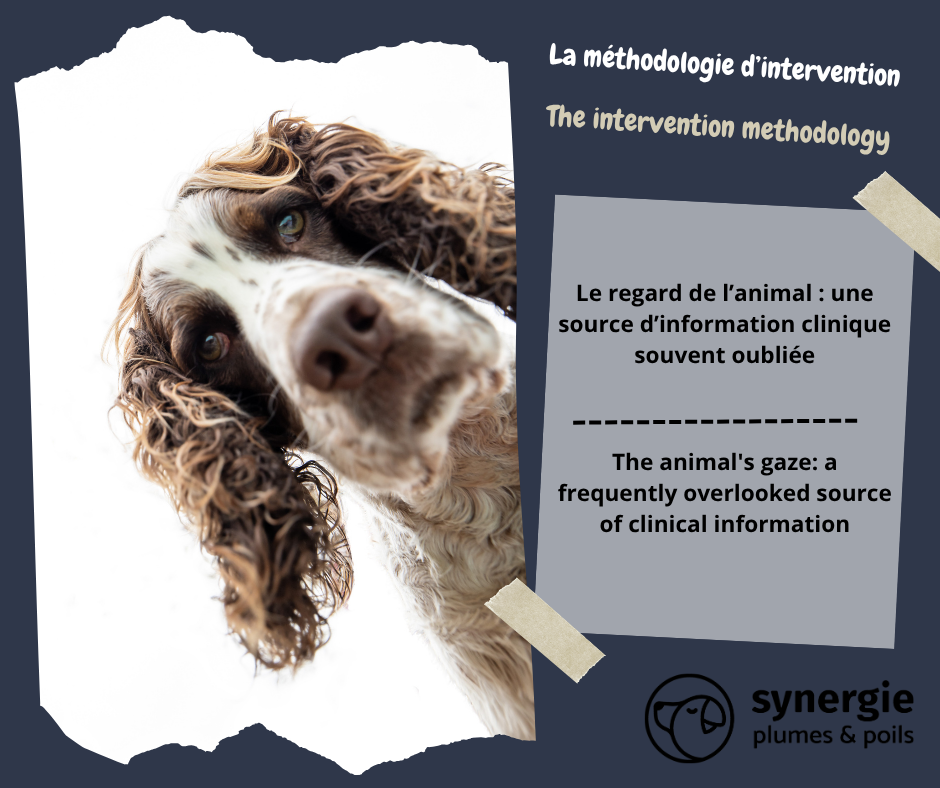
What if one of the best observers in your intervention was… your animal partner? In helping relationships, professionals develop their capacity for observation. They pay attention to behaviors, emotions, verbal and non-verbal language, reactions, and the evolution of the person being accompanied. When an animal is integrated into an intervention, a new source of information […]
How about analyzing an intervention photo? Photo #9
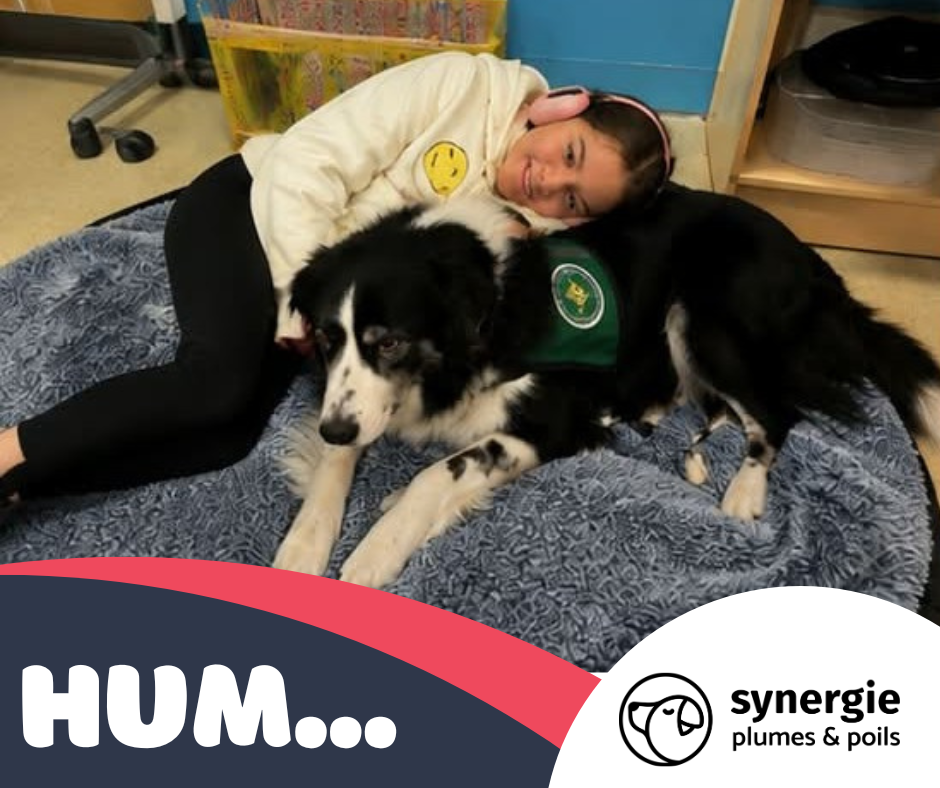
When you ask a professional what their main intervention tools are, the answers are often the same. Games. Cards. Equipment. Rewards. The dog. The horse. Or the various exercises offered to participants. All of these elements are useful. But are they really the most important tools? At Synergie Plumes et Poils, we believe that the […]
What if calming were only the starting point?
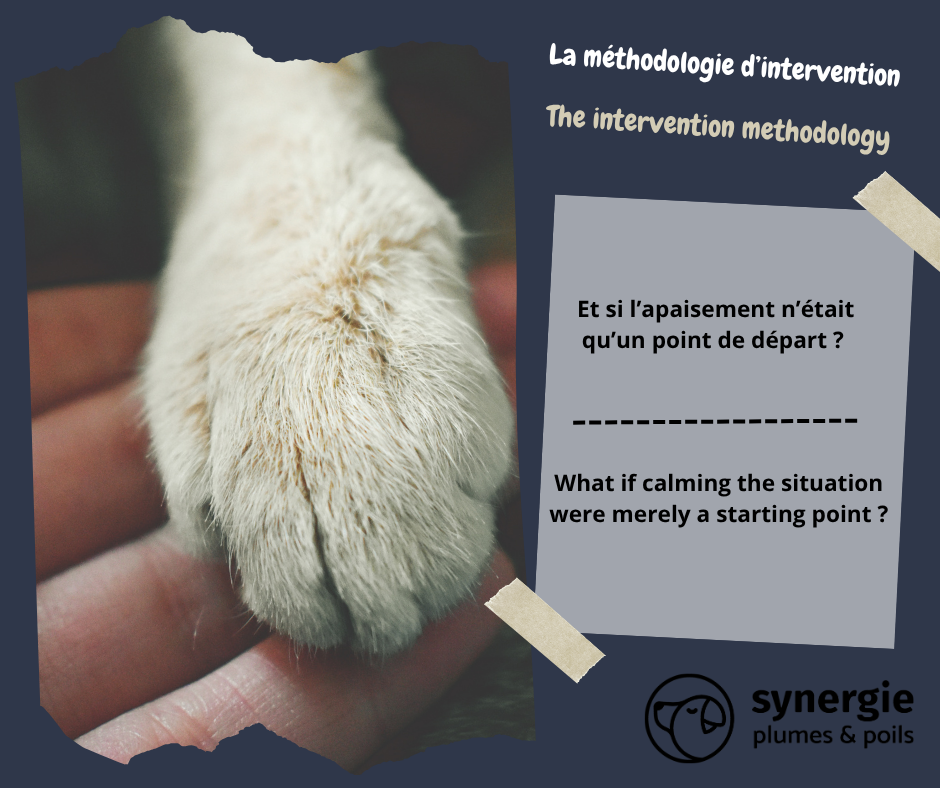
Part of the answer may lie in what is currently being delivered in the field. If the difference between an animal’s presence and a true human-animal interactions methodology isn’t clearly visible, it becomes difficult for an observer to understand why specialized training is necessary. Let’s examine together a few elements that sustain this perception. Limiting […]
How about analyzing a photo from a session? Photo #8
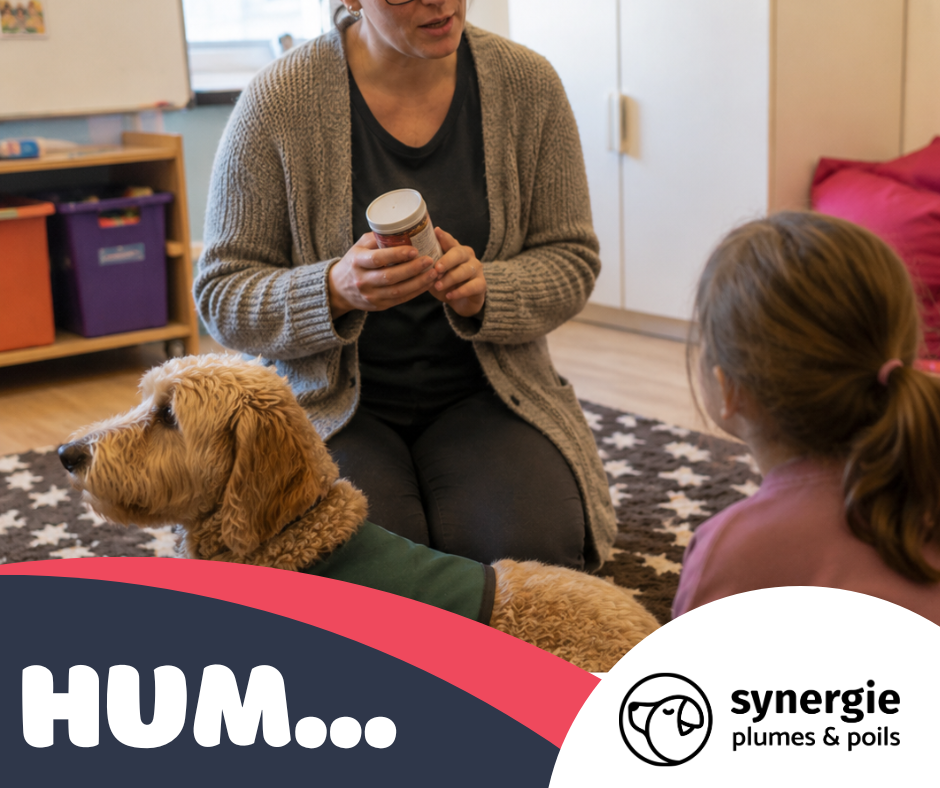
When you ask a professional what their main intervention tools are, the answers are often the same. Games. Cards. Equipment. Rewards. The dog. The horse. Or the various exercises offered to participants. All of these elements are useful. But are they really the most important tools? At Synergie Plumes et Poils, we believe that the […]
Is knowing your clientele enough to integrate an animal?
The professional already knows their clientele More and more professionals in the helping professions are choosing to integrate their own animal into their practice, without having completed specialized training in animal-assisted interventions. This reality is increasingly accepted by receiving environments, managers, and the organizations that fund these services. But why? Part of the answer may […]
How can interactions with an animal and a professional support the development of parenting skills?
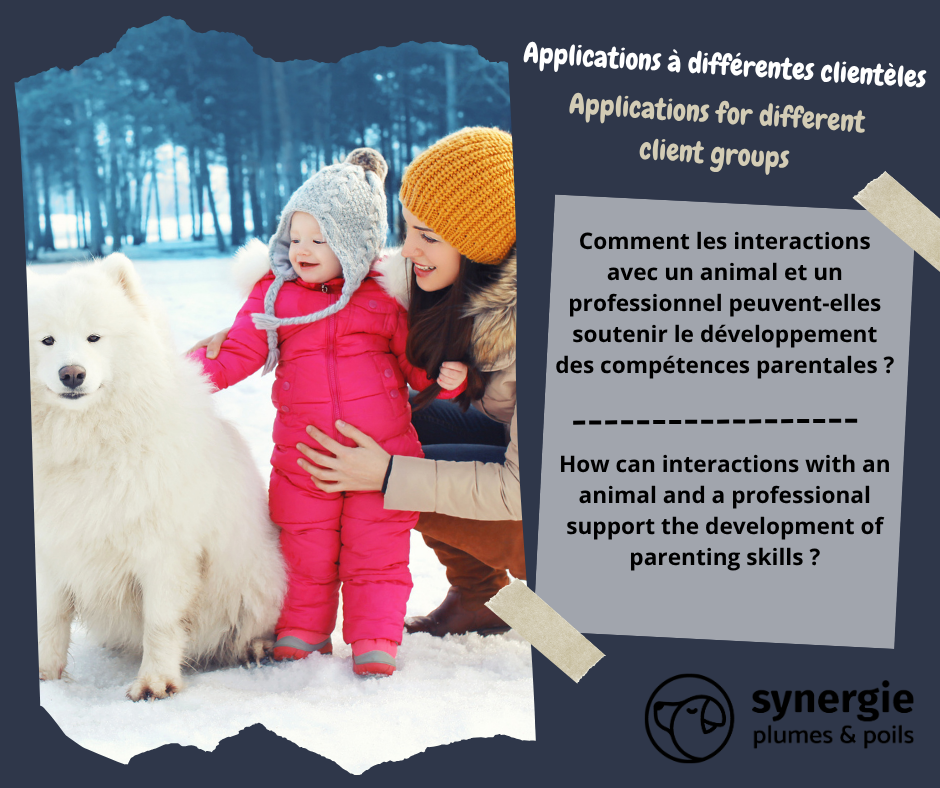
How can you help a parent support their child while fostering independence instead of doing things for them? Being a parent means constantly seeking a balance between supporting your child and giving them the space they need to learn on their own. Out of a desire to help, many parents step in quickly when a […]
Want to analyze an intervention photo? Photo #7
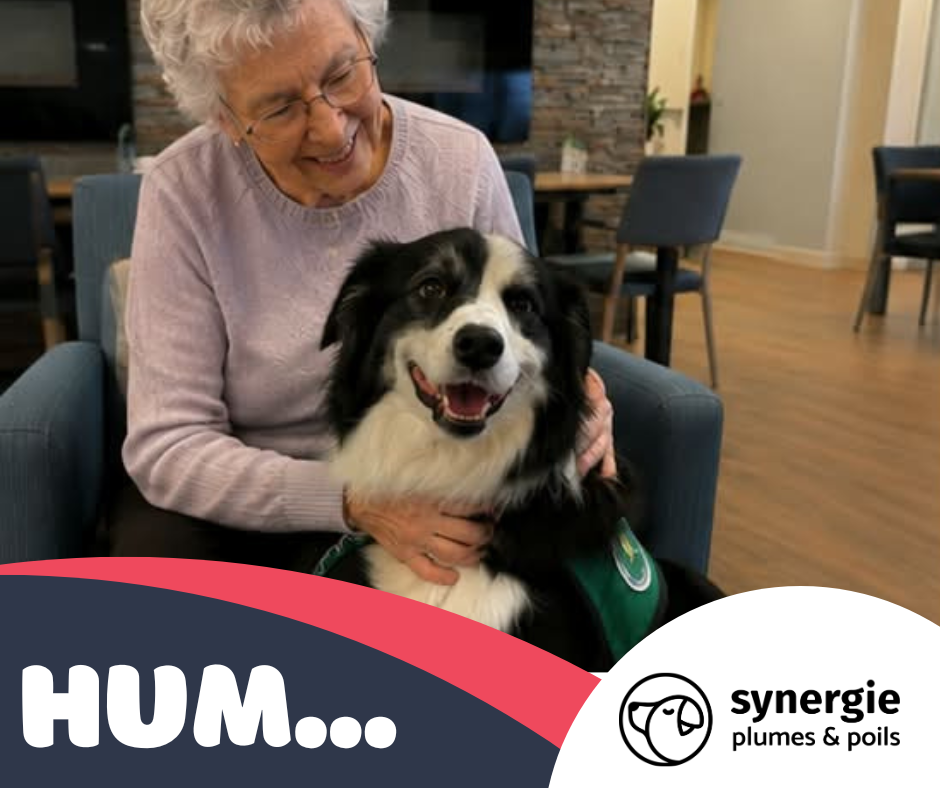
When you ask a professional what their main intervention tools are, the answers are often the same. Games. Cards. Equipment. Rewards. The dog. The horse. Or the various exercises offered to participants. All of these elements are useful. But are they really the most important tools? At Synergie Plumes et Poils, we believe that the […]
How can interactions with an animal and a professional support an adolescent living with challenges related to substance use?
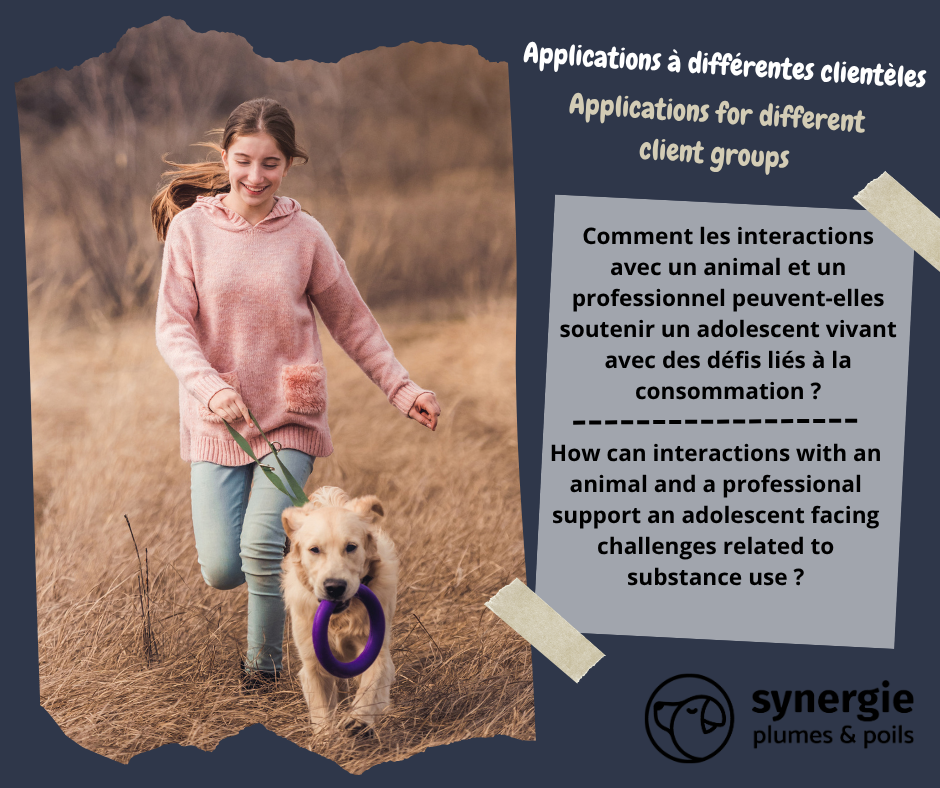
How can we support an adolescent who struggles to believe they are capable of making different choices? Adolescents living with challenges related to substance use present very diverse realities. Some use substances to manage their emotions, others to belong to a group, escape a difficult situation, or simply because they do not see other solutions. […]
Is it better to choose a puppy or an adult dog?
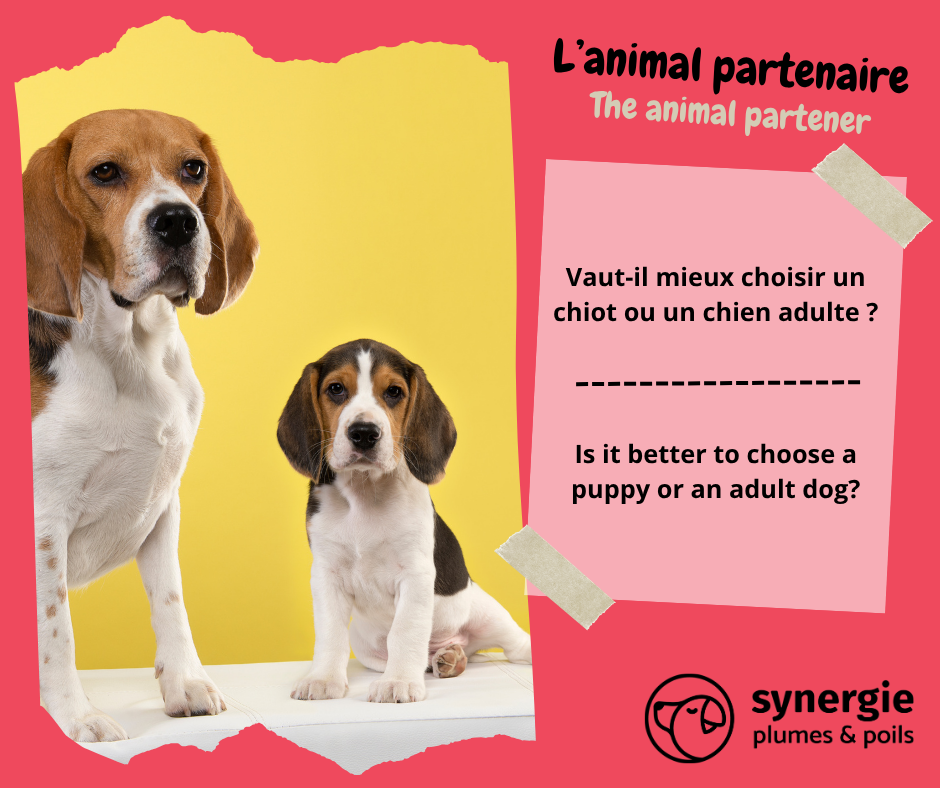
“I’ll get a puppy. That way, I’ll teach it everything and make it an excellent therapy dog.” This idea is very common. It’s reassuring. It gives the impression that everything will depend on its upbringing and training. But one question deserves to be asked: Can we truly build any partner animal from any puppy? At […]
How about analyzing an intervention photo? Photo #6
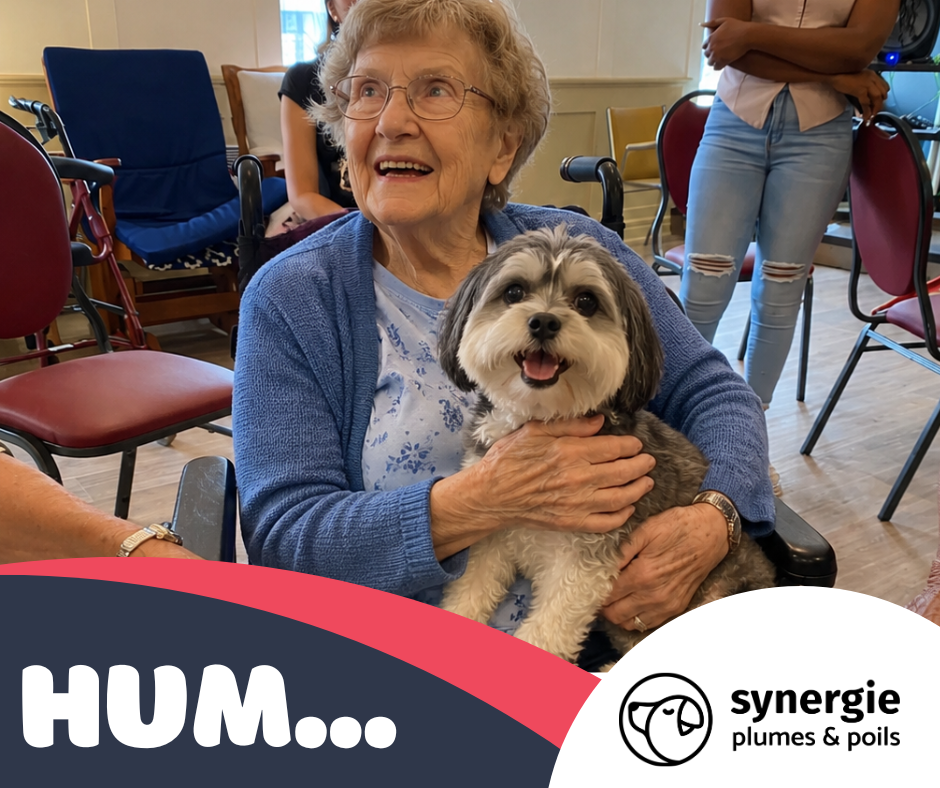
When you ask a professional what their main intervention tools are, the answers are often the same. Games. Cards. Equipment. Rewards. The dog. The horse. Or the various exercises offered to participants. All of these elements are useful. But are they really the most important tools? At Synergie Plumes et Poils, we believe that the […]
An animal in the classroom: is it truly an animal-assisted intervention?
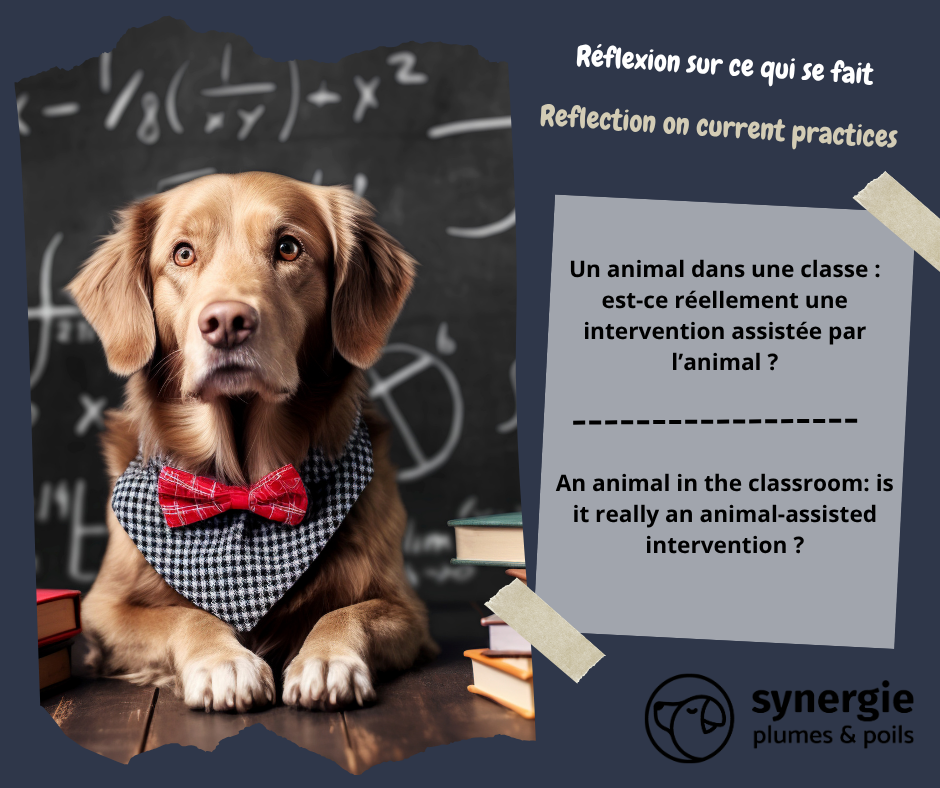
“We have a dog in the classroom. The students benefit greatly from it.” It is entirely possible for an animal to have positive effects within a living environment. Their presence can be reassuring for some people. Creating a pleasant atmosphere. Encouraging social interaction. Providing a welcome presence. These effects are real. However, an important question […]
How about analyzing an intervention photo? Photo #5
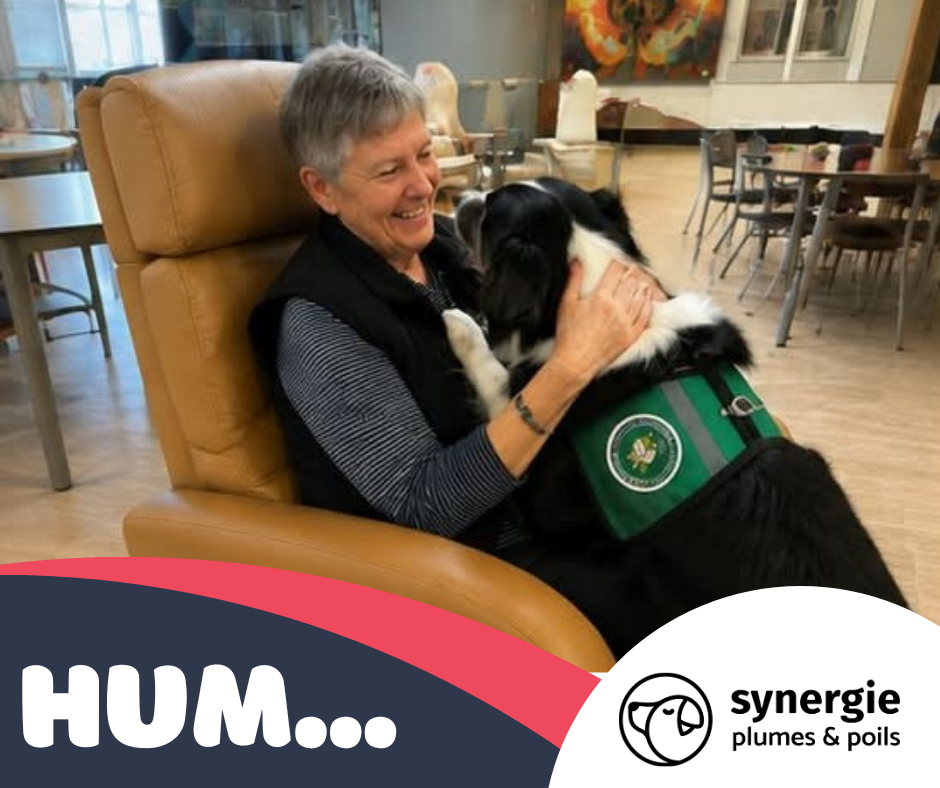
When you ask a professional what their main intervention tools are, the answers are often the same. Games. Cards. Equipment. Rewards. The dog. The horse. Or the various exercises offered to participants. All of these elements are useful. But are they really the most important tools? At Synergie Plumes et Poils, we believe that the […]
Do the benefits of my animal at home translate the same way in interventions?
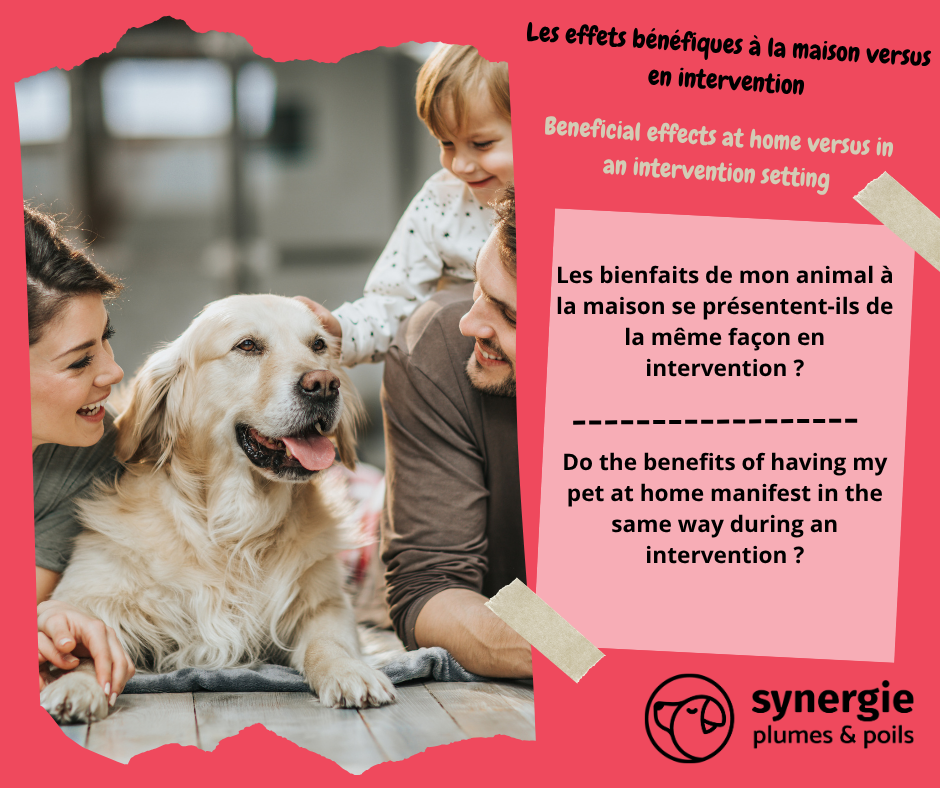
“My dog calms me when I’m stressed. He’ll certainly have the same effect with my clients.” This thought is common. And it’s not entirely wrong. Animals hold an important place in the lives of many families. They greet us after a difficult day, comfort us when we’re sad, motivate us to go for a walk, […]
How about analyzing an intervention session photo? Photo #4
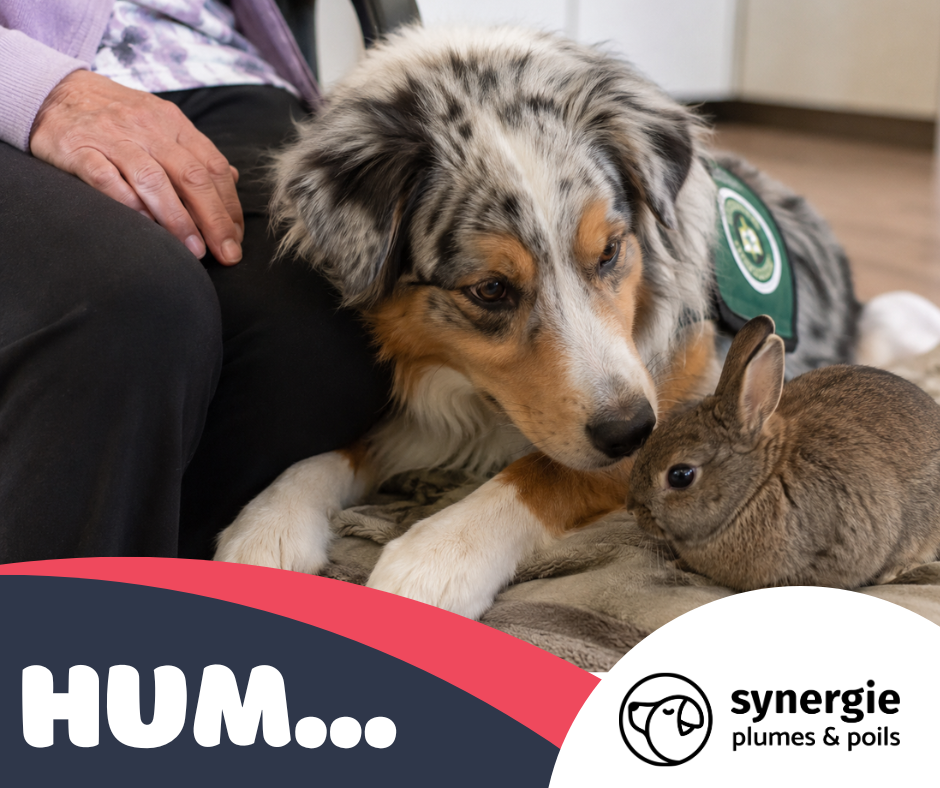
When you ask a professional what their main intervention tools are, the answers are often the same. Games. Cards. Equipment. Rewards. The dog. The horse. Or the various exercises offered to participants. All of these elements are useful. But are they really the most important tools? At Synergie Plumes et Poils, we believe that the […]
How about analyzing an intervention photo? Photo #3
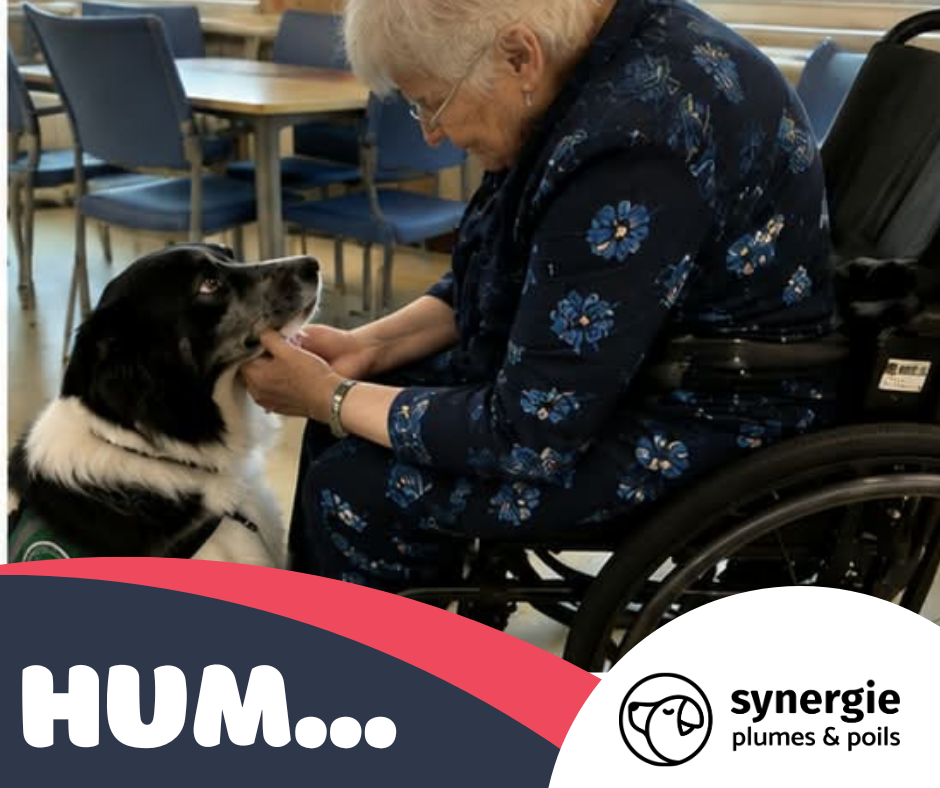
When you ask a professional what their main intervention tools are, the answers are often the same. Games. Cards. Equipment. Rewards. The dog. The horse. Or the various exercises offered to participants. All of these elements are useful. But are they really the most important tools? At Synergie Plumes et Poils, we believe that the […]
When a client falls right in front of an animal…
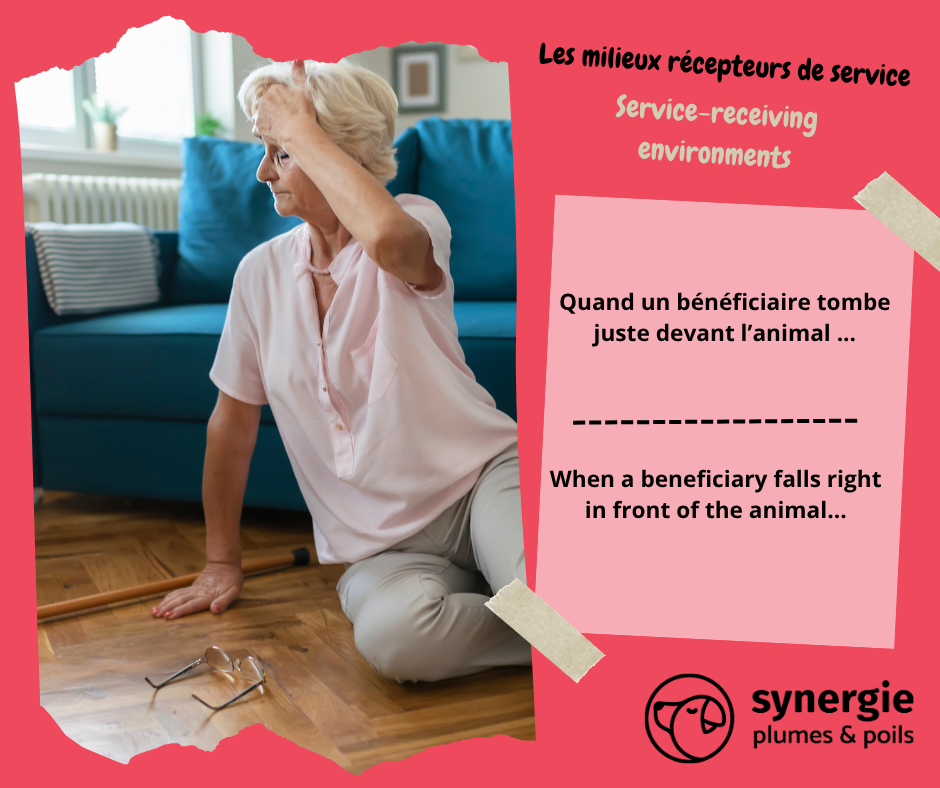
Everything is going as planned. Then, suddenly, a client loses their balance and falls near the dog. The practitioners react immediately. They secure the person, assess their condition, and follow the established procedures. For them, this situation is unfortunately part of the risks of their field. But what about the animal? It sees someone fall […]
An intervention photo to analyze, how about it? Photo #2
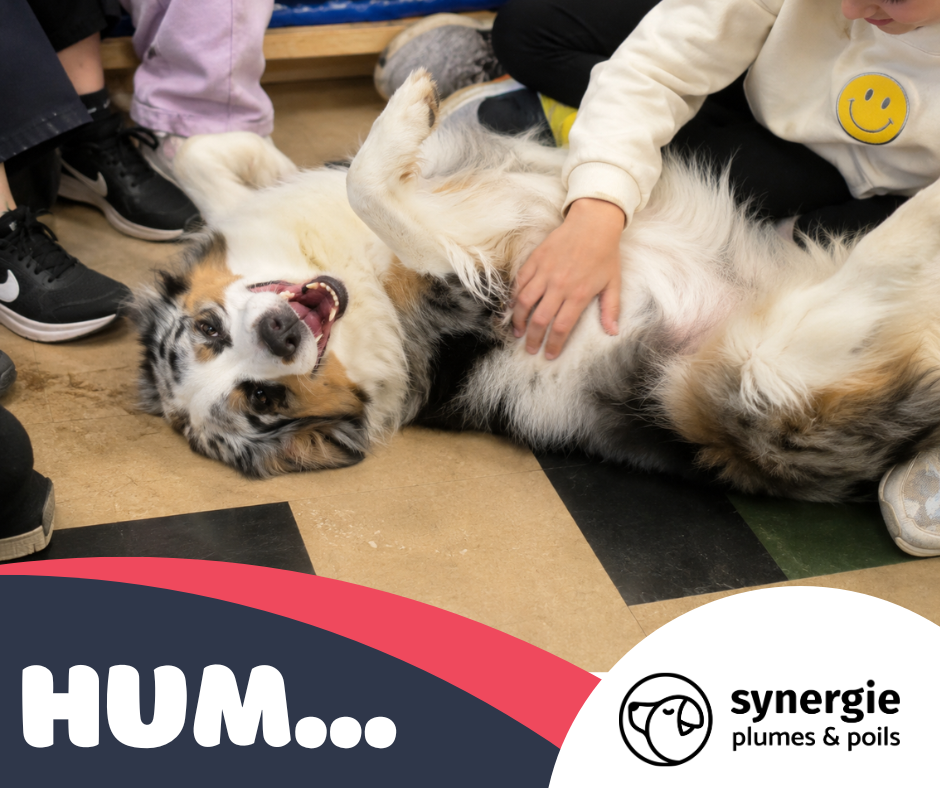
When you ask a professional what their main intervention tools are, the answers are often the same. Games. Cards. Equipment. Rewards. The dog. The horse. Or the various exercises offered to participants. All of these elements are useful. But are they really the most important tools? At Synergie Plumes et Poils, we believe that the […]
How can interactions with an animal and a professional support someone living with a mental health challenge?

Why do some people regain the desire to try when an animal is part of the intervention? People living with a mental health challenge face a wide range of realities. They may experience anxiety, depression, burnout, low self-confidence, relationship difficulties, or a loss of motivation. Intervention goals are just as diverse: building self-esteem, encouraging emotional […]
Would you like to analyse an intervention photo? Photo #1
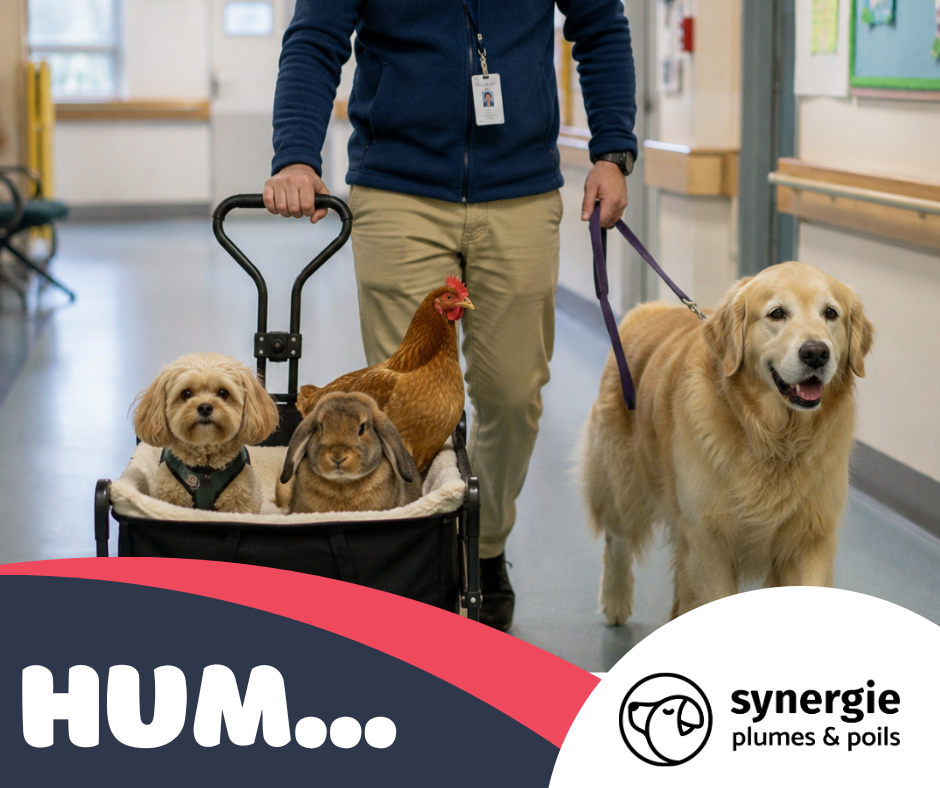
When you ask a professional what their main intervention tools are, the answers are often the same. Games. Cards. Equipment. Rewards. The dog. The horse. Or the various exercises offered to participants. All of these elements are useful. But are they really the most important tools? At Synergie Plumes et Poils, we believe that the […]
Should an animal always take a long time to explore its environment before a session?
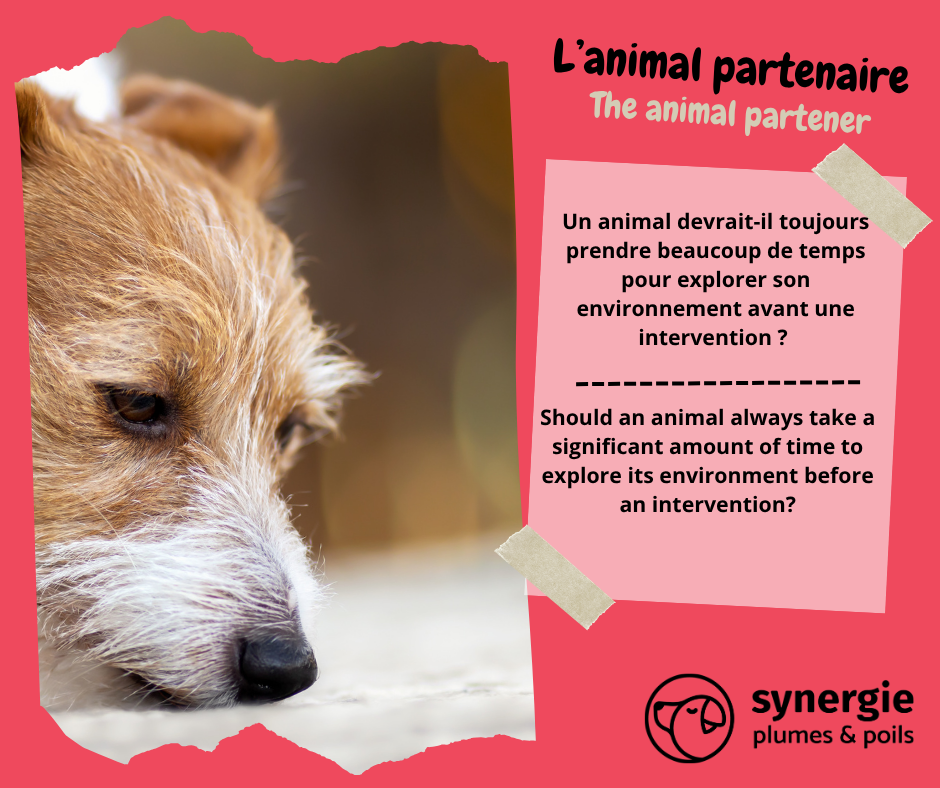
‘You have to let the dog explore the room for 15 or 20 minutes before starting.’ This recommendation is often heard in animal-assisted intervention. And it is true that an animal always discovers a new environment through its senses. But one question deserves to be asked: If an animal needs to explore every new environment […]