A participant who’s afraid of the animal or not interested in it: an obstacle or an opportunity for intervention?
What if the participant’s first reaction was already valuable information for the intervention? When an animal is included in an intervention, many expect the participant to immediately want to get closer. To pet it. To play with it. To show interest. But reality is sometimes quite different. Some people prefer to keep their distance. Others […]
The practitioner’s real tool is invisible
When you ask a professional what their main intervention tools are, the answers are often the same. Games. Cards. Equipment. Rewards. The dog. The horse. Or the various exercises offered to participants. All of these elements are useful. But are they really the most important tools? At Synergie Plumes et Poils, we believe that the […]
How can interactions with an animal and a professional support the development of social skills in someone living with Autism Spectrum Disorder?
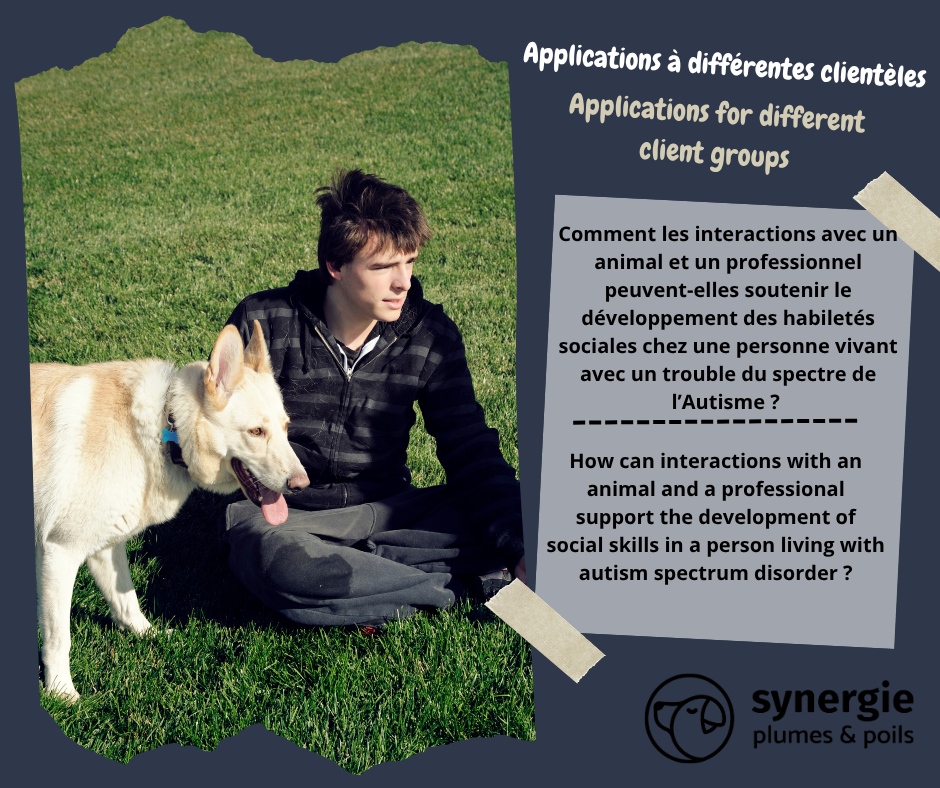
How can you help someone better take their communication partner’s reactions into account? People living with Autism Spectrum Disorder present very diverse profiles and needs. Some may experience challenges related to communication, social interactions, understanding others’ behaviors, or adapting their own behaviors according to the context. Intervention goals are therefore always personalized. This might involve, […]
What if the most important thing is neither the human nor the animal, but what happens between the two?
Is knowing the human and knowing the dog really a methodology? When we talk about methodology in animal-assisted intervention, I often hear the same response. “I know my dog well and his signals.” “I’m already a professional in helping relationships.” And then? Yes, you should know the human. Yes, you should know your animal partner. […]
Is a shepherd the best choice for animal-assisted therapy?
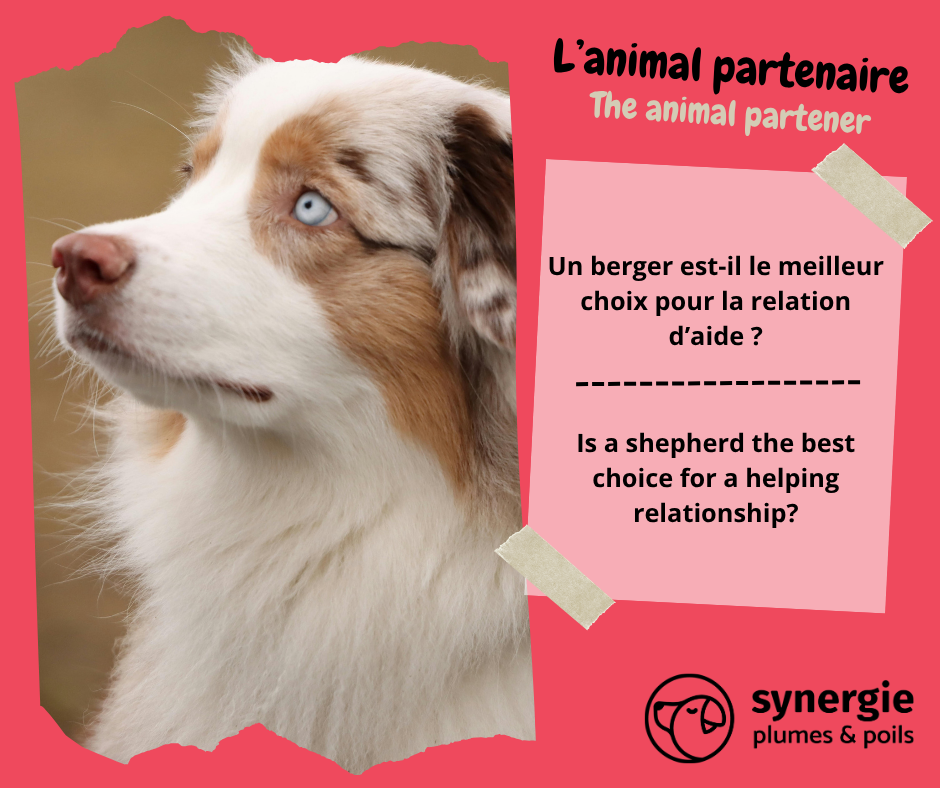
“Shepherds are intelligent, love to work, and are very attentive to their human. They therefore make excellent intervention animals.” It is true that several shepherd-type breeds possess remarkable qualities. They learn quickly. They love to collaborate. They are often very committed to their primary handler. These characteristics can represent real strengths. But an essential question […]
How can interactions with an animal and a professional improve communication in the workplace?
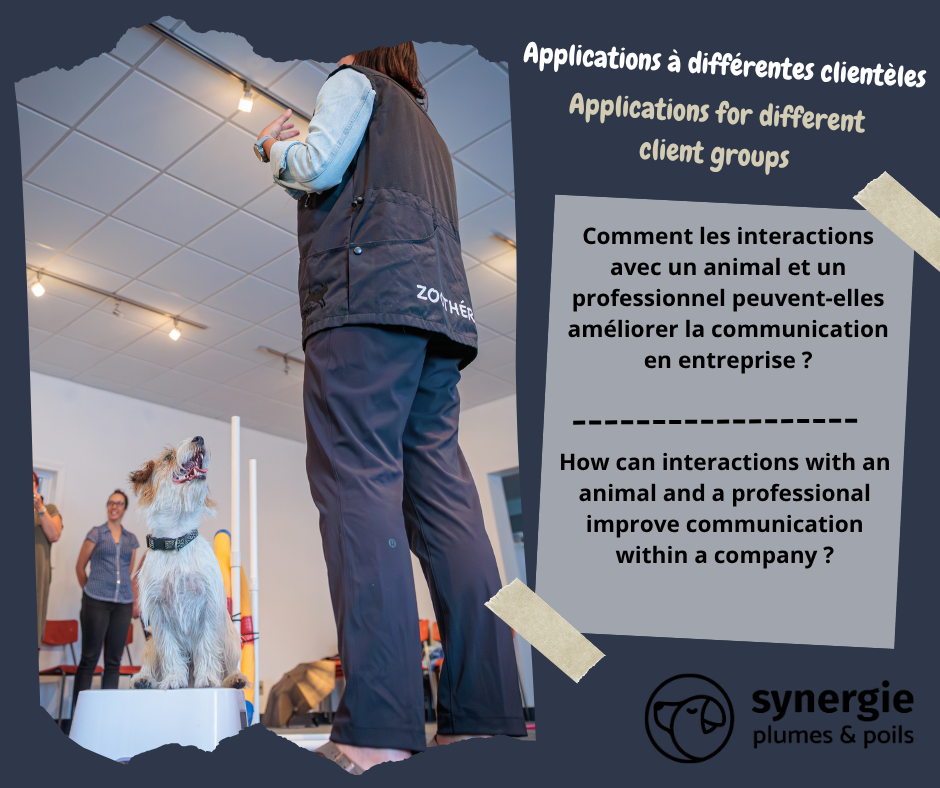
Why are some messages well understood while others create confusion, frustration, or misunderstanding? Communication is at the heart of a team’s functioning. Yet, even with the best intentions, messages don’t always produce the desired effects. Some people communicate quickly, others give little information, some take up a lot of space while others hesitate to express […]
When several beneficiaries solicit the animal at the same time…
The activity begins… The activity comes to an end… Suddenly, several beneficiaries want to interact with the dog at the same time. One person calls it. Another reaches out. A third approaches with a reward. A fourth wants to pet it. The intervener knows their group well. They understand the participants’ enthusiasm and intervene to […]
Silence: when it’s finally the animal’s turn to speak
What if, to better understand an animal, we first needed to make less noise? During interventions, we are often very active. We explain. We encourage. We ask questions. We give instructions. We reassure. We support. All these interventions have their place. Yet, they sometimes take up so much space that they leave little room for […]
Can we ask a client to keep pushing an animal to teach them about respecting boundaries?
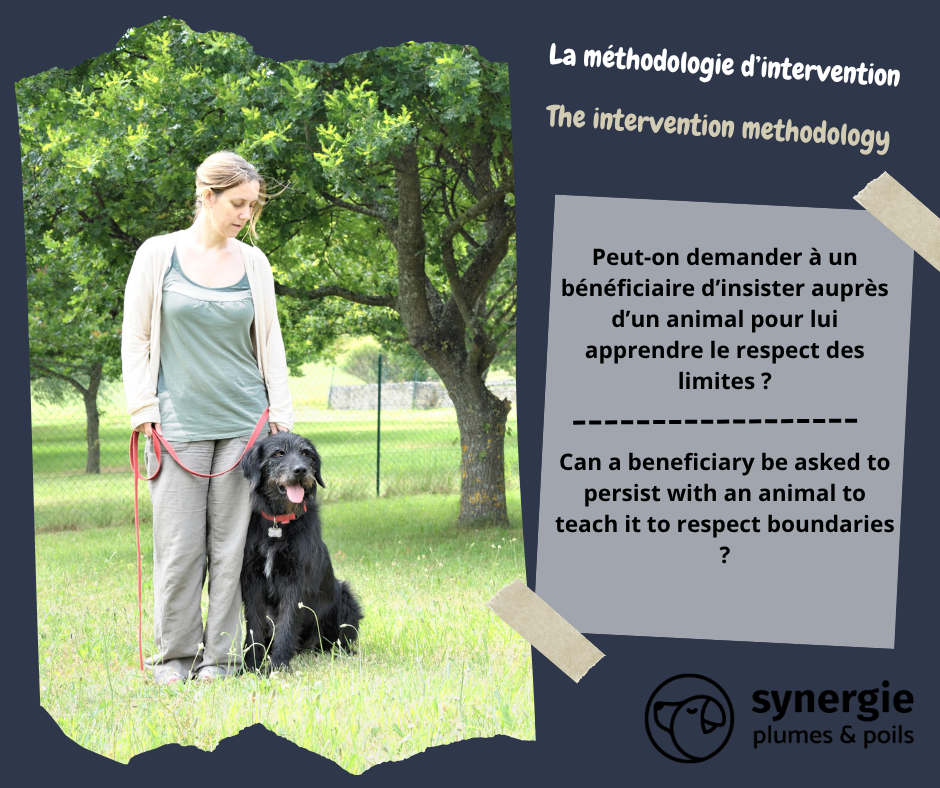
“We’re going to ask the client to push a little more. The dog will eventually listen, and that’s how they’ll understand what a boundary is.” At first glance, this idea might seem interesting. After all, learning to recognize and respect the boundaries of others is a frequent goal in the helping relationship. But an essential […]
My dog reduces my stress, but will it have the same effect on a client during an intervention?
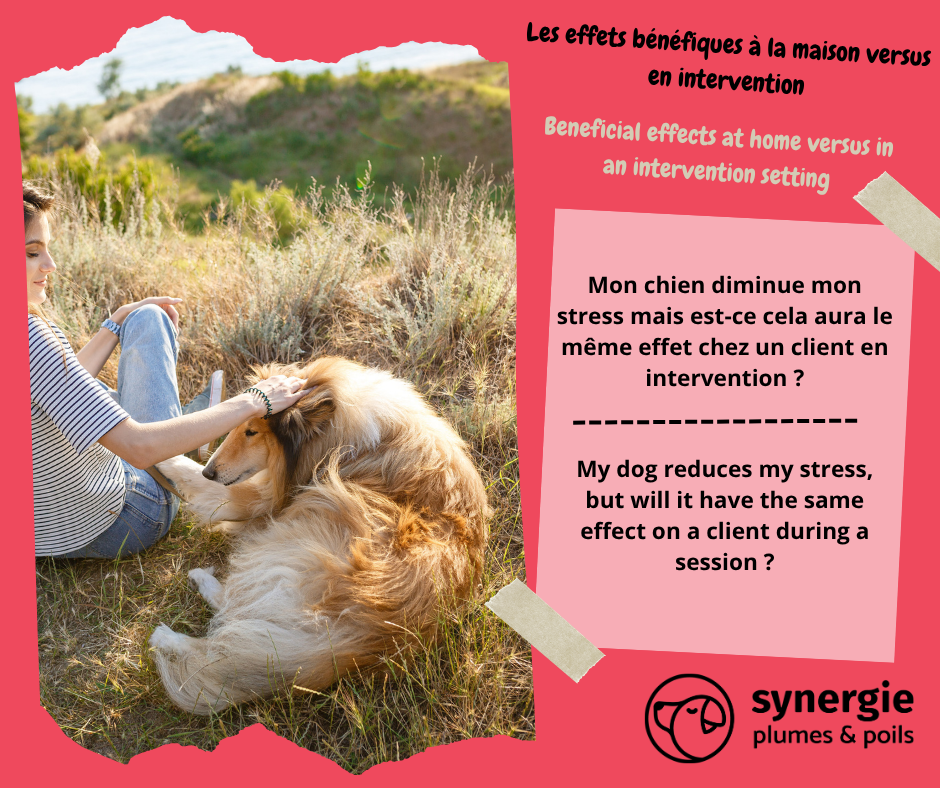
“When I’m stressed, a few minutes with my dog are enough to make me feel better.” This experience is shared by many pet owners. After a difficult day, they spend time with their companion. They play, walk, watch them sleep, or simply enjoy their presence. They feel a sense of calm. This effect is real. […]
Can a calm animal become an emotional vessel?

Is a calm dog really easier to manage than an engaged dog? “I’m looking for a very calm dog. It will be much easier during interventions.” This is a widespread idea. And yet, it deserves some nuance. Because a calm dog is often easier to manage… But is it always the best partner for achieving […]
Touch: protecting the animal also means protecting the quality of the intervention

What if the best professional gesture sometimes is not allowing contact? When an animal is present, many people’s first instinct is to want to touch it. This reaction is natural. It is often associated with comfort, affection, or the pleasure of meeting an animal. But in animal-assisted intervention, one essential question should always come before […]
When our role as a helping professional makes us overlook the methodology of human-animal interactions

What if our greatest strength as a practitioner sometimes became our biggest blind spot? Helping professionals develop remarkable expertise. They learn to observe behaviors, understand emotions, analyze needs, build intervention plans, and guide individuals toward their goals. This expertise is essential. But when an animal is integrated into the intervention, a new reality emerges. It’s […]
When a beneficiary suddenly throws an object…

The activity is taking place calmly. The dog is focused on its interaction with the beneficiary. Then, without warning, an object flies across the room. For the practitioner, this reaction may be related to frustration, disorganization, impulsivity, or difficulty expressing an emotion. They know their clientele and quickly adapt their intervention. But what does the […]
How can interactions with an animal and a professional support learning to read?

Why do some children rediscover a love for reading when an animal partner is part of the experience? Learning to read is a challenge for many children. Some lack confidence, fear making mistakes, read very little at home, or avoid situations where they have to read in front of others. Intervention goals can vary: developing […]
Should an animal approach a beneficiary whenever it feels like it?

“We always let the dog choose the person who needs it most.” This idea is often presented as a great quality in animal-assisted intervention. It’s touching. It gives the impression that the dog instinctively knows what to do. But an essential question deserves to be asked: Is it really the animal’s role to decide who […]
What truly unites our graduates?

We are sometimes asked what distinguishes the professionals trained at Synergie Plumes et Poils. Is it the training received? Our instructors’ skills? Our organization’s values? Of course, all of that is important. But what truly unites our graduates goes much further. A professional community is built around a methodology A professional community is not built […]
What if we defined interventions by their methodology rather than by their professional title?

When we talk about animal-assisted interventions, we tend to define them by the professional who carries them out. A psychologist with a dog. An occupational therapist with a dog. A speech therapist with a dog. A specialized educator with a dog. This way of presenting things makes sense. It allows for a quick understanding of […]
Does the animal automatically add value to your intervention?

“I’m already a good professional. If I add my dog to my interventions, I’ll have an additional tool.” This thought is common. And it’s completely understandable. After all, animals often promote engagement, motivation, and relationship building. But a question deserves to be asked. Does the animal truly bring added value, or is it simply present […]
“Making a living from intervention”: a message that deserves to be nuanced

“Do you love animals? Do you love helping people? Come make a living from zootherapy.” This message is often used to present the profession. It’s inspiring, but at times it borders on sounding more like a marketing pitch and a scam than quality training! It makes you want to contribute to others’ well-being. But it […]